
Dentures for Seniors in Singapore: Types, Costs and What CHAS Pays

Written by NoFrills Dental clinical team
Updated 31/08/2026
MediSave will not pay a cent towards a denture, and the Flexi-MediSave dental extension for seniors leaves dentures out as well. CHAS is the one scheme that does pay, up to $418.50 per arch on a Pioneer Generation card, against an MOH benchmark of $500 to $818. Here is what a denture costs in Singapore in 2026, exactly what each card pays for each type, and the three year limit that decides whether the subsidy is there when you need it.
- MOH benchmarks a complete removable denture at $500 to $818 per arch, upper or lower.
- CPF Board names dentures, alongside extractions, crown fittings and braces, as not covered by MediSave.
- The Flexi-MediSave dental extension for seniors aged 60 and above covers root canal treatments and permanent crowns. Dentures are not on that list.
- CHAS pays for one upper and one lower denture per three calendar years. A reline or repair carries its own separate yearly limit.
- Among Singaporeans aged 67 and above, complete tooth loss fell from 39.3 per cent in 2009 to 23.7 per cent in 2023 to 2024, but chewing function did not improve alongside it.
What a denture costs
In September 2025 the Ministry of Health published fee benchmarks for 18 dental procedures at CHAS clinics, and four of those 18 are dentures. A benchmark is not a price control and it is not a quotation. It is the range MOH considers reasonable, published so that patients have something to compare a quotation against, and CHAS dental clinics have been required to display it since 1 October 2025.
| Procedure | MOH fee benchmark |
|---|---|
| Removable denture, complete (upper or lower) | $500 to $818 |
| Removable denture, partial, simple (upper or lower) | $320 to $603 |
| Removable denture, partial, complex (upper or lower) | $450 to $750 |
| Denture reline or repair (upper or lower) | $80 to $150 |
Source: MOH, Annex B, 1 September 2025.
Two things are worth noticing straight away. The benchmark is stated per arch, so a patient who needs both an upper and a lower set is looking at two of those figures rather than one. And the range is wide: the upper bound on a complete denture is more than sixty per cent above the lower bound. Denture fees move with the material, the number of fitting visits and the laboratory work involved, and the benchmark does not attempt to separate those out. Our dentures page describes what is involved at each level, and our treatment fees page sets out how we quote.
From 1 September 2026, a CHAS dental clinic charging above the published benchmark has to submit a clinical justification with the claim. That does not forbid charging more. It means somebody has to be able to explain why, which is a reasonable thing for a patient to ask about too. We went through what the benchmarks do and do not cover in our guide to the 2026 fee benchmarks.
What CHAS pays towards it
CHAS subsidies for dentures rose sharply on 1 October 2025, and the increase was one of the largest anywhere in the scheme. A complete denture on a CHAS Blue card carried up to $256.50 of subsidy before that date. It now carries up to $408.50. The change came out of Budget 2025 and the rates were confirmed in MOH's announcement of 1 September 2025.
Per complete denture, upper or lower.
Per complete denture, upper or lower.
Household income per person of $1,500 and below.
Household income per person of $1,501 to $2,300.
MOH publishes no Green column in its dental table.
Maximum CHAS subsidy per claim for a complete removable denture, from 1 October 2025.
The full picture across the four denture line items looks like this. Note that a CHAS Orange card, which carried nothing at all towards a filling or an extraction under the older rates, does carry a denture subsidy.
| Card | Maximum subsidy per claim |
|---|---|
| Complete denture, upper or lower | Benchmark $500 to $818 |
| Pioneer Generation | $418.50 |
| Merdeka Generation | $413.50 |
| CHAS Blue | $408.50 |
| CHAS Orange | $272.50 |
| Partial denture, simple | Benchmark $320 to $603 |
| Pioneer Generation | $314.00 |
| Merdeka Generation | $309.00 |
| CHAS Blue | $304.00 |
| CHAS Orange | $202.50 |
| Partial denture, complex | Benchmark $450 to $750 |
| Pioneer Generation | $395.50 |
| Merdeka Generation | $390.50 |
| CHAS Blue | $385.50 |
| CHAS Orange | $257.00 |
| Denture reline or repair | Benchmark $80 to $150 |
| Pioneer Generation | $85.00 |
| Merdeka Generation | $80.00 |
| CHAS Blue | $75.00 |
| CHAS Orange | $50.00 |
Source: MOH, CHAS dental subsidies from 1 October 2025.
Set against the lower end of MOH's own benchmark, those figures cover most of the bill. This is the part that surprises people: a simple partial denture priced at the bottom of the benchmark range is very nearly paid for by a CHAS Blue card.
How much of a bottom-of-benchmark denture a CHAS Blue card covers
CHAS Blue subsidy as a share of the lower bound of MOH's published fee benchmark for each procedure. A fee towards the upper bound leaves proportionally more to pay.
The three year limit
Every CHAS dental subsidy carries a claim limit, and the denture limits are the most restrictive in the scheme. Most procedures reset each calendar year. Dentures do not.
| Item | Claim limit |
|---|---|
| Complete denture | 1 upper and 1 lower per 3 calendar years |
| Partial denture, simple or complex | 1 upper and 1 lower per 3 calendar years, shared across all types of partial denture |
| Denture reline or repair | 1 upper and 1 lower per calendar year |
| Consultation | 2 per calendar year, with a 6 month interval between them |
| Extractions | 4 per calendar year, shared across all types |
Source: MOH, CHAS dental subsidies, claim limits column.
Three consequences follow, and none of them is obvious from the table alone.
First, the limit is shared across types. If you claim for a simple partial upper this year and lose further teeth next year, the subsidy for the complex partial that replaces it is not available again until the three calendar years have run. Planning matters more than usual here, which is why we would rather assess the whole mouth before making the first denture than solve one gap at a time.
Second, calendar years are not rolling twelve month periods. A denture claimed in December 2026 counts against 2026, 2027 and 2028, so the subsidy comes back in January 2029. A denture claimed in January 2026 clears at the start of 2028. The same claim, made twelve months apart, can differ by a full year in when it renews.
Third, the reline and repair limit is annual and separate, and it exists precisely because a denture that fits well today will fit less well in three years. The jaw ridge underneath a denture keeps remodelling after the teeth are gone. A reline re-fits the base to the ridge that is actually there now, and on a CHAS Blue card it carries up to $75 of subsidy each year against a benchmark of $80 to $150. Using it is often the difference between a denture that lasts its full term and one that quietly stops being worn.
Why MediSave pays nothing
This is the most common misunderstanding we hear at the front desk, and the answer is unambiguous. CPF Board states that dental treatments are generally not eligible for MediSave claims, except for surgical treatments carried out for medical reasons such as wisdom tooth surgery and dental implants. It then names the exclusions directly: tooth extractions, crown fittings, dentures and orthodontic braces are not covered by MediSave.
So the extractions that often come before a denture are not MediSave claimable either, even though they are part of the same course of treatment. Our page on using MediSave for dental treatment explains where the line actually falls, and the broader comparison, scheme by scheme, is in our guide to dental insurance, MediSave and CHAS. The CHAS, Merdeka and Pioneer money page covers eligibility for the cards themselves.
Nor does the newest scheme help. From mid-2026, seniors aged 60 and above can draw on Flexi-MediSave to offset up to $400 a year at CHAS dental clinics and public healthcare institutions. MOH's wording is specific about what that $400 is for: root canal treatments and permanent crowns. Dentures are not included. We covered the extension in detail in our Flexi-MediSave 2026 explainer.
MOH has stated the Flexi-MediSave dental extension as taking effect from mid-2026. We have not found a separate go-live confirmation beyond that wording, so treat the start date as announced rather than commenced, and ask us at the counter.
Private dental insurance is a third question again. Most employer group plans treat dental as a small annual sub-limit rather than a substantial benefit, and dentures are commonly excluded as a prosthetic. Ask your insurer for your remaining annual dental limit before you commit to treatment, not afterwards.
Bring your CHAS, Merdeka or Pioneer card and we will check your remaining claim limits with you.
Which denture are you being quoted for
The word denture covers several quite different things, and because CHAS pays a different amount for each, it is worth knowing which one is on your quotation.
A complete denture replaces every tooth in one jaw and rests on the gum ridge and, for an upper, on the palate. A partial denture fills in around teeth that are still there and is held by clasps or rests on them. MOH splits partials into simple and complex and defines them by how many teeth are being replaced: simple is described as being for replacement of fewer than six teeth, and complex as being for replacement of five or more. Those two descriptions overlap at exactly five teeth in MOH's own published wording, so if you are being quoted for a five tooth partial it is fair to ask which category the clinic will claim under. The difference is $81.50 on a CHAS Blue card.
Materials are the other axis, and here is the useful part: MOH's subsidy categories and its fee benchmarks do not distinguish acrylic from a cast cobalt chromium framework. A metal framework partial is usually thinner, more rigid and easier to eat with, and it usually costs more. The subsidy attached to it is the same. So the material decision moves your fee without moving your subsidy, and it should be made on fit and function rather than on what you assume CHAS will do about it.
An implant retained overdenture is a different proposition again: a removable denture that clips onto two or more implants rather than resting on the gum alone. It is the usual answer when a lower complete denture will not stay put, and we describe it on our implant overdentures page. Because the implant placement is surgical, that part of the treatment may be MediSave claimable even though the denture itself is not.
A worked example
Take a patient who needs a complete upper and a complete lower denture, and take a fee of $700 per arch, which sits inside MOH's benchmark range of $500 to $818. Here is how the bill resolves on a CHAS Blue card.
| Complete upper denture | $700.00 |
| Complete lower denture | $700.00 |
| Total before subsidy | $1,400.00 |
| CHAS Blue subsidy applied, complete upper denture | $408.50 |
| CHAS Blue subsidy applied, complete lower denture | $408.50 |
| MediSave | $0.00 |
| You pay | $583.00 |
Illustrative only. The $700 per arch figure was chosen inside MOH's published benchmark range and is not a quotation. Consultation, X-rays and any extractions are separate line items carrying their own CHAS subsidies and limits.
The same set, and the same $1,400, resolves differently depending on which card is in the wallet.
What is left to pay on a $1,400 upper and lower set, by card
Two complete dentures at $700 each, with the maximum CHAS subsidy per claim applied to each arch. Bars show the remaining amount as a share of the $1,400 starting total.
Roughly two fifths of the starting total on a Blue, Merdeka or Pioneer card, and rather more than that on Orange. It is also worth saying plainly that this is a once-in-three-years event, which is worth bearing in mind when the quotation arrives as a single number. The same subsidy structure applies to a root canal treatment or a permanent crown, each with its own separate claim limit.
When a denture is not the answer
A denture is one way to replace missing teeth and it is often the right one, particularly where many teeth are gone or where the remaining teeth will not support anything fixed. But it is not the only option, and the financing runs in the opposite direction, which is worth understanding before you choose.
A dental bridge fills a short gap by joining to the teeth on either side. A dental implant replaces the root as well as the crown and does not rest on the gum at all. And here is the symmetry: the treatment CHAS subsidises is not MediSave claimable, and the treatment MediSave covers is not CHAS subsidised. Implant placement is surgical, so MediSave may apply. Dentures are not surgical, so CHAS applies instead. Neither scheme covers both.
Where the choice is genuinely close, our comparison of implants and dentures goes through the trade offs on comfort, bone preservation and lifespan, and our page on alternatives to implants covers the ground for patients who have been told implants are not suitable. Where several teeth and the bite itself need rebuilding together, that becomes full mouth rehabilitation. If bone volume is the obstacle, bone grafting is sometimes the step that makes a fixed option possible. Our NF Denture and Implant Centre handles the more complex prosthetic cases.
One more thing belongs here. The commonest reason a denture is needed at all in later life is not decay, it is gum disease, which loosens teeth silently over years. If you still have most of your teeth, treating the gums early is what protects the teeth you still have, and scaling and polishing and regular check-ups are what keep the disease in check.
Looking after it
The American College of Prosthodontists published evidence based guidelines for the care and maintenance of complete dentures, developed with the American Dental Association's Council on Scientific Affairs and other bodies. The practical points are short, and most denture wearers have never been told them.
- Clean the denture daily by soaking and brushing it with an effective non-abrasive denture cleanser. The guidelines describe daily removal of the biofilm as of paramount importance.
- Use denture cleansers only outside the mouth, and rinse the denture thoroughly before putting it back in.
- Never place a denture in boiling water, and do not soak it in bleach or a bleach-containing product for longer than ten minutes.
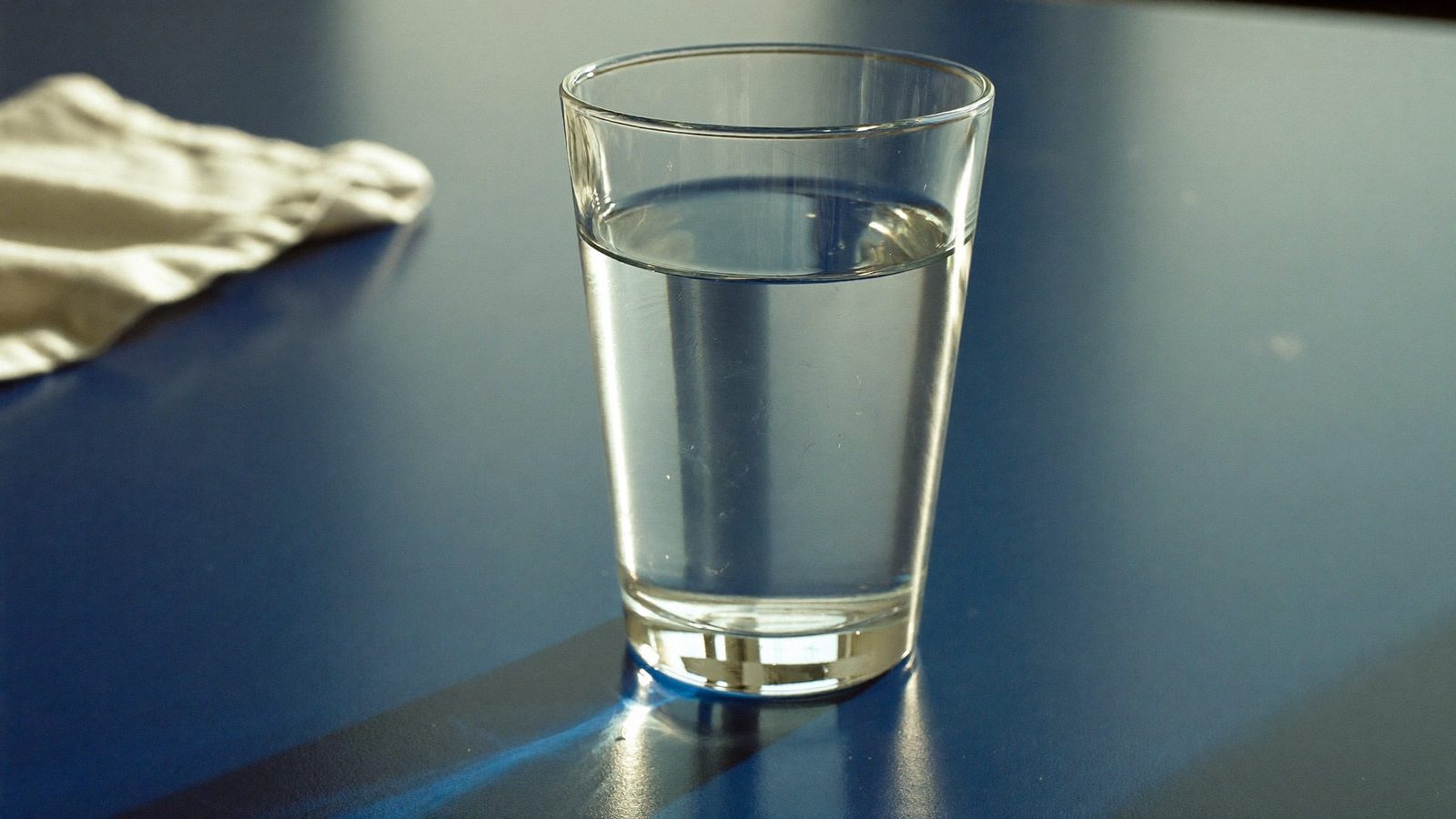
- When it is out, store it immersed in water so that it does not warp.
- Do not wear it continuously, twenty four hours a day. The guidelines advise against that as a way of reducing denture stomatitis, the sore red inflammation of the tissue underneath a denture.
- If you use adhesive, three or four pea sized dollops is the quantity described, and it should be removed completely from both the denture and the mouth every day.
- If you find you need more adhesive than you used to for the same hold, that is the signal to have the fit checked rather than to buy a larger tube.
- Have the denture checked once a year for fit and function, for bone loss, and for oral lesions.
That last point is the one we would underline. A denture appointment is one of the few remaining occasions on which an older patient with no natural teeth still sees a dentist, and the soft tissue examination that comes with it is how mouth cancer and other mouth spots and sores get found early. Losing your teeth does not end the reason for a check-up. It changes what the check-up is looking for, and the link between oral health and general health runs in both directions.
There is a Singapore-specific reason to take chewing seriously. A 2026 study in the Journal of Dentistry tracked fifteen years of national survey data and found that complete tooth loss among adults aged 67 and above fell from 39.3 per cent in 2009 to 23.7 per cent in 2023 to 2024. Yet masticatory function did not improve overall, and it worsened among those aged 67 to 74. More people are keeping teeth, and they are not necessarily chewing any better for it. A denture that fits, and the daily hygiene routine that keeps the remaining teeth sound, are both part of the answer.
Getting a denture with us
A denture is made over several short visits rather than one long one, because each stage has to set before the next can be taken. What that involves is on our dentures page, and our guide to getting dentures walks through the first few weeks of wearing one.
- Book a consultation at Suntec City, Marina Square, Marine Parade or Tanjong Katong. All four are beside an MRT station and all four accept CHAS, Merdeka and Pioneer cards.
- Bring your CHAS, Merdeka or Pioneer card, and your old denture if you have one. We can check what has already been claimed in the current period before anything is decided.
- We examine the whole mouth rather than only the gap, and take X-rays where they are needed. Any decay or gum treatment that has to happen first is planned at this point.
- Impressions and bite records are taken over the following visits, then a try-in, then the fit. You see and approve the teeth before the denture is finished.
- We ask you back for a review after a week or two. Adjustments in that period are normal and are part of the treatment, not a sign that something has gone wrong.
You can see all of our clinic locations, and the full list of treatments we provide if you are not sure which one you need.
Not sure whether a denture is right for you?
Come and talk it through at any of our four Singapore clinics: Suntec City, Marina Square, Marine Parade and Tanjong Katong. We will check your CHAS claim limits with you and set out the options in writing.
Frequently asked questions
What is a removable denture?
A removable denture is a prosthesis that replaces missing teeth and the gum around them, and that you take out for cleaning. A complete denture replaces all the teeth in one jaw and rests on the gum ridge, and for an upper denture on the palate as well. A partial denture replaces some of the teeth and is held in place by clasps or rests on the natural teeth that remain. MOH treats complete dentures, simple partials and complex partials as three separate procedures with three separate subsidy amounts.
How much does a denture cost in Singapore in 2026?
MOH's published fee benchmark for a complete removable denture is $500 to $818 per arch, upper or lower. A simple partial denture is benchmarked at $320 to $603 and a complex partial at $450 to $750. A reline or repair is benchmarked at $80 to $150. Those are reference ranges published by MOH in September 2025 for CHAS dental procedures rather than quotations, and a patient needing both an upper and a lower set should expect two of those figures rather than one.
Does CHAS cover dentures?
Yes. Since 1 October 2025, CHAS subsidises up to $408.50 per complete denture on a CHAS Blue card, $413.50 on a Merdeka Generation card and $418.50 on a Pioneer Generation card. A CHAS Orange card carries up to $272.50. Simple partial dentures carry up to $304.00 on a CHAS Blue card and complex partials up to $385.50. A CHAS Green card carries no dental subsidy, because MOH publishes no Green column in its dental subsidy table.
Can I use MediSave for dentures?
No. CPF Board states that dental treatment is generally not eligible for MediSave claims except for surgical treatment carried out for medical reasons, and it names dentures specifically as not covered, alongside tooth extractions, crown fittings and orthodontic braces. The Flexi-MediSave dental extension announced for seniors aged 60 and above from mid-2026 does not change this, because MOH has stated that it covers root canal treatments and permanent crowns.
How often can I claim CHAS for a new denture?
One upper and one lower denture per three calendar years, and that limit is shared across all types of partial denture. A reline or repair is separate and can be claimed once for an upper and once for a lower each calendar year. Because the limit runs on calendar years rather than a rolling twelve months, the month you claim in affects when the subsidy renews: a denture claimed in December 2026 counts against 2026, 2027 and 2028.
Do I have to take my dentures out at night?
The evidence based guidelines published by the American College of Prosthodontists advise against wearing dentures continuously, twenty four hours a day, as a way of reducing denture stomatitis. When the denture is out it should be stored immersed in water so that it does not warp. If a sore red area has already developed underneath the denture, that should be looked at rather than managed at home, because the fit may need adjusting as well as treating.
What is the difference between a simple and a complex partial denture?
MOH defines them by the number of teeth being replaced. A simple partial denture is described as being for replacement of fewer than six teeth and a complex partial as being for replacement of five or more, wording that overlaps at exactly five teeth. The difference matters financially because the subsidy is $81.50 higher for a complex partial on a CHAS Blue card. If you are being quoted for a five tooth partial, it is worth asking which category the clinic will claim under.
Related reading
Sources: MOH, Community Health Assist Scheme; MOH press release and annexes, 1 September 2025; CPF Board, How MediSave can help with your healthcare expenses; CPF Board, What is outpatient Flexi-MediSave; American College of Prosthodontists, Evidence-Based Guidelines for the Care and Maintenance of Complete Dentures; Tay et al., Journal of Dentistry, February 2026.