
Home/ Dental Fillings
Dental Fillings in Singapore
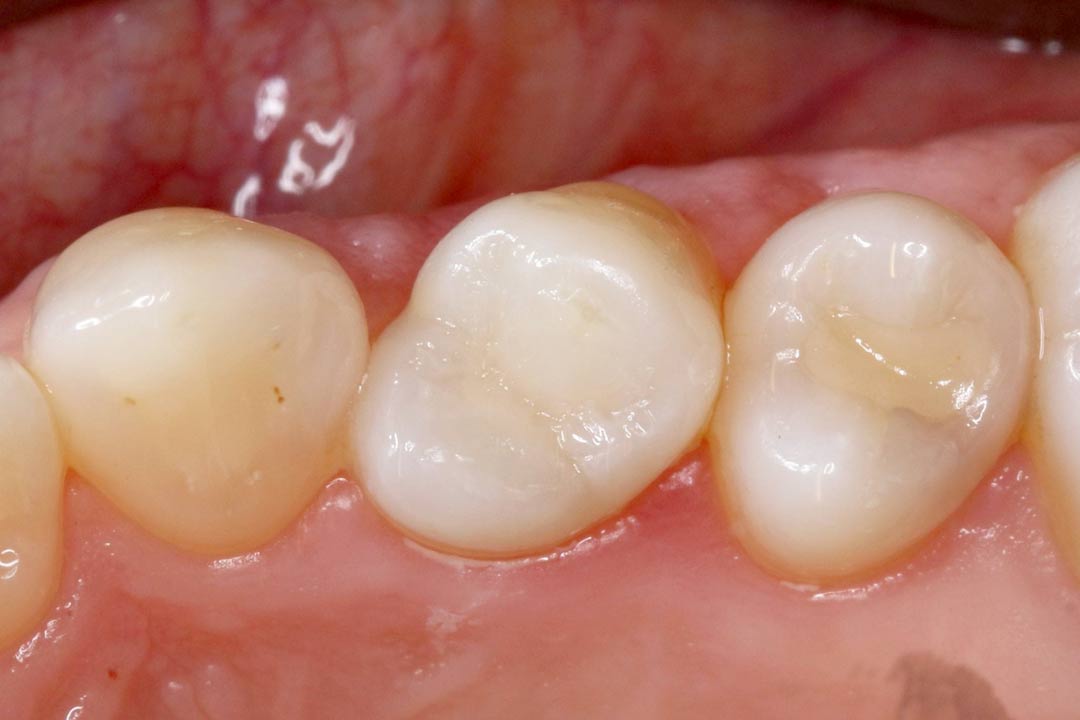
A composite filling at NoFrills Dental starts from $100. It repairs a tooth damaged by decay before that damage reaches the nerve and turns into root canal treatment from $500. Tooth coloured composite is what most patients choose today. Amalgam, gold and ceramic each still have a place, and this page explains which suits which tooth.
Medically reviewed by the NoFrills Dental Medical Team. Last updated 4 August 2026.
Or WhatsApp us on +65 9007 1085.
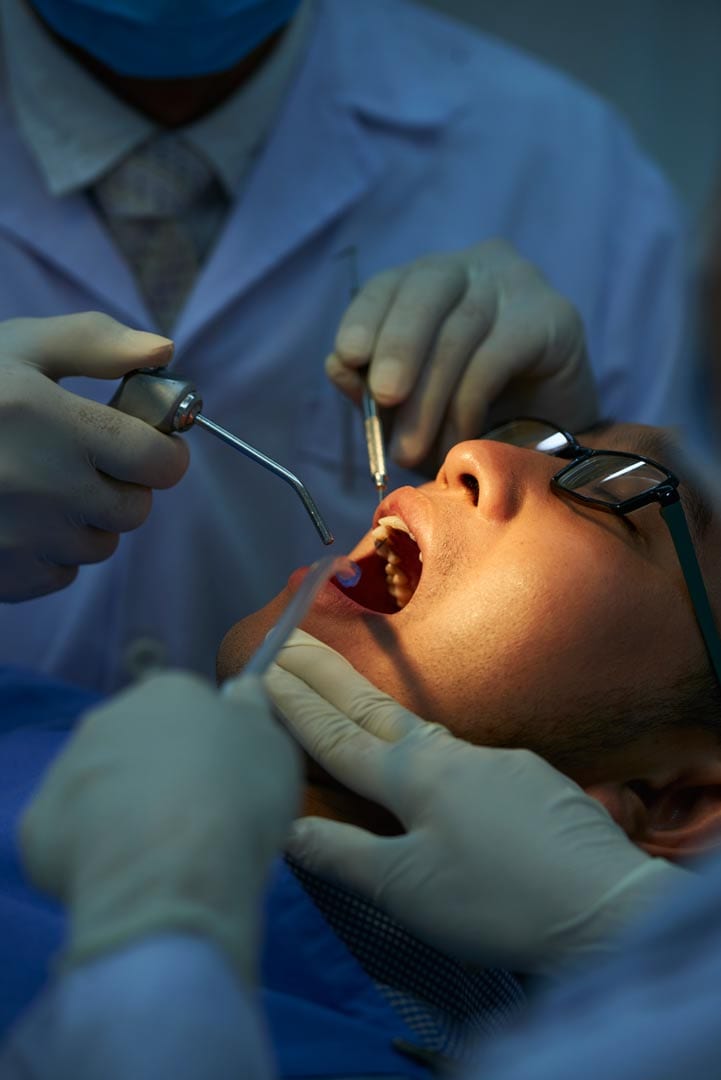
Tooth coloured, bonded, one visit. Before GST.
One visit for a direct filling.
Fillings are covered by CHAS for cardholders.
What is a dental filling?
Decay is bacteria dissolving the tooth from the outside in, and it is the most common noncommunicable disease worldwide according to the World Health Organization. Once a cavity forms, the tooth cannot repair itself. A filling removes the decayed tissue and rebuilds the missing structure so the tooth works normally again and the decay stops spreading.
Leave it long enough and the decay reaches the nerve. At that point a filling is no longer enough, and the options become root canal treatment, a crown, or extraction. That progression is the single best argument for treating a small cavity early, and for keeping up with routine dental check-ups, since early decay is usually painless.
- The tooth is numbed if the cavity is deep. Small, shallow fillings often need no anaesthetic at all.
- The decayed tissue is removed and the cavity is shaped.
- The material is placed, layer by layer for composite, then hardened.
- The filling is trimmed and polished so your bite feels normal.
Types of dental filling compared
There is no single best material. The right choice depends on where the tooth sits, how much structure is left, how visible it is and what you want to spend.
| Material | Best suited to |
|---|---|
| Composite resin (tooth coloured) | Front and back teeth where appearance matters. Bonds to the tooth so less healthy structure is removed. The default choice for most patients. |
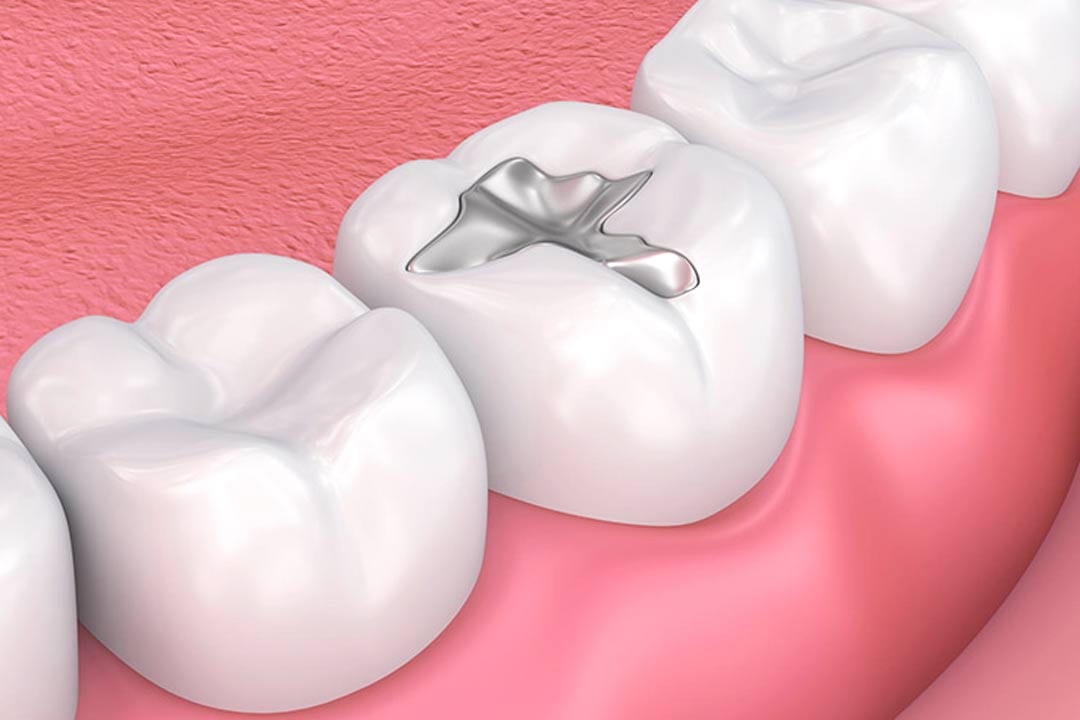
| Dental amalgam (silver) | Large cavities in back teeth under heavy chewing load. Hard wearing and long lasting, but dark and more of the tooth must be cut to hold it. |
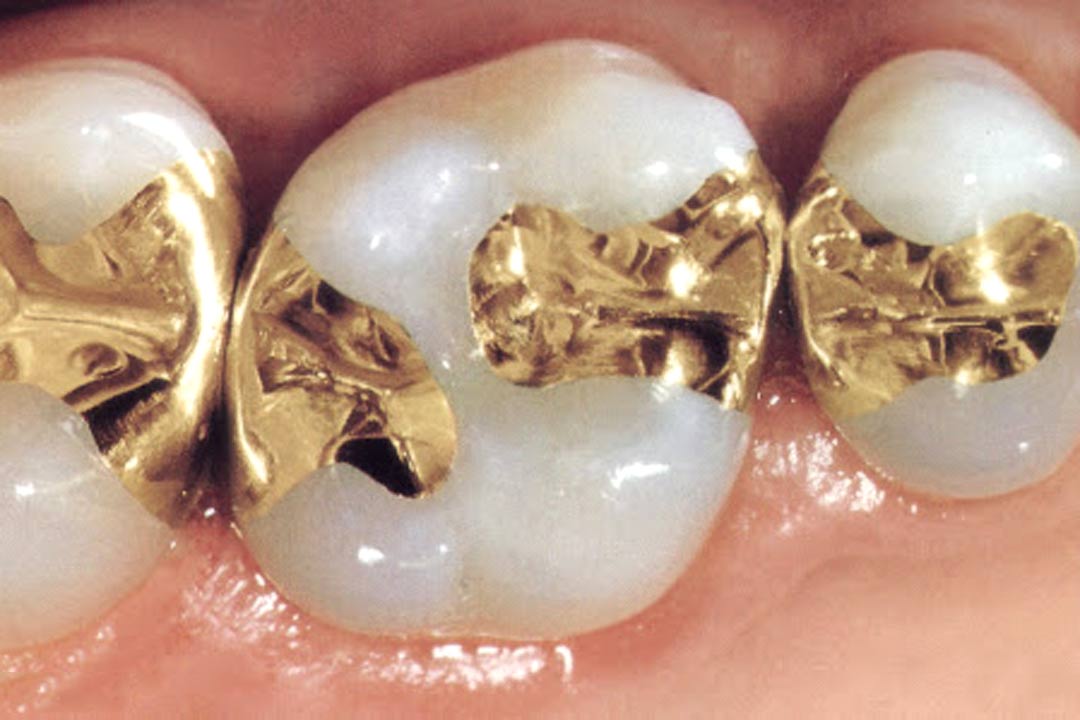
| Gold | Back teeth, where longevity matters more than appearance. Extremely durable and kind to the opposing tooth, but the most expensive and it takes two visits. |
| Ceramic or porcelain | Larger restorations that need to look natural and resist staining. Made in a laboratory as an inlay or onlay. |
| Glass ionomer | Children's teeth, root surfaces and areas below the gum. Releases fluoride but wears faster, so it is not used on chewing surfaces. |
How long fillings typically last
General ranges reported in the dental literature. Your own filling depends far more on your bite, your grinding habits and your cleaning than on the material alone.
Relative comparison, not a guaranteed lifespan. A composite filling in a well cared for mouth can easily outlast an amalgam in a mouth that grinds.
Are amalgam fillings safe, and should I replace mine?
This is the question we are asked most often, so here is the straight answer. Dental amalgam contains mercury bound into a stable alloy. Major health authorities, including the World Health Organization and the US Food and Drug Administration, consider existing amalgam fillings safe for the general population and do not recommend removing sound amalgam fillings. Drilling out a filling that is doing its job removes healthy tooth and releases more mercury vapour than leaving it alone.
Where advice differs is on placing new amalgam. Under the Minamata Convention on Mercury, countries including Singapore are phasing down amalgam use, and it is generally avoided for young children and during pregnancy. In practice most new fillings we place are composite.
The American Dental Association reaches the same conclusion. Replace an amalgam filling when there is a dental reason: it has fractured, decay has appeared underneath, or the tooth has cracked around it. Cosmetics are a legitimate reason too, as long as you understand the trade off. If yours is intact, the evidence supports leaving it.
What the evidence does not show: no authority has established that removing sound amalgam fillings improves general health. Claims that routine amalgam removal treats unrelated medical conditions are not supported.
How much does a dental filling cost in Singapore?
A composite filling at NoFrills Dental starts from $100, and a temporary filling from $60. The fee rises with the number of tooth surfaces involved and the depth of the cavity, so a large multi surface restoration costs more than a small single surface one.
| Treatment | Fee |
|---|---|
| Composite filling (tooth coloured) | From $100 |
| Temporary filling | From $60 |
| Consultation | $50 |
| X-ray, periapical (single tooth) | $50 |
| Crown, if the tooth is too broken to fill | From $950 |
| Root canal, if decay reaches the nerve | From $500 |
Fees are NoFrills Dental prices before GST and vary with the complexity of the case, as stipulated by the Ministry of Health. Current as at our published price list.
What a straightforward first visit looks like
| Consultation | $50 |
| Periapical X-ray of the tooth | $80 |
| One composite filling | From $100 |
| Total, before GST | From $230 |
Illustrative only, for a single small cavity found and filled at the same visit. Larger or deeper cavities cost more, and we quote before starting.
Why waiting costs more than the filling
This is the part patients rarely see until it is too late. Decay does not pause. The same tooth gets progressively more expensive the longer it is left.
The cost of the same tooth, over time
NoFrills Dental starting fees, before GST. Bars are scaled to the starting price of each treatment.
A small cavity treated early costs roughly a fifth of the same tooth treated after the nerve is involved. This is the whole argument for six monthly check-ups.
What changes the fee
| Factor | Effect |
|---|---|
| Number of tooth surfaces | A three surface filling takes longer and costs more than a single surface one |
| Material chosen | Composite and amalgam are placed in one visit. Gold and ceramic are laboratory made across two |
| Depth of the cavity | Deep cavities may need a protective lining, and occasionally turn out to need root canal treatment |
| Tooth position | Back teeth are harder to access than front teeth |
CHAS covers dental fillings. If you hold a CHAS, Merdeka Generation or Pioneer Generation card, the subsidy is deducted at the clinic, so you pay the subsidised amount rather than claiming it back. Our guide to CHAS dental subsidies in 2026 sets out the tiers.
MediSave does not cover fillings, because it applies only to surgical procedures. See using MediSave for dental treatment for what it does cover. Many patients are also covered under a dental insurance plan, and families with young children should look at the Baby Bonus scheme.
We quote your fee before we start. If a cavity turns out deeper than it looked on the X-ray, we stop and talk to you rather than pressing on.
Inlays and onlays: when a filling is not enough
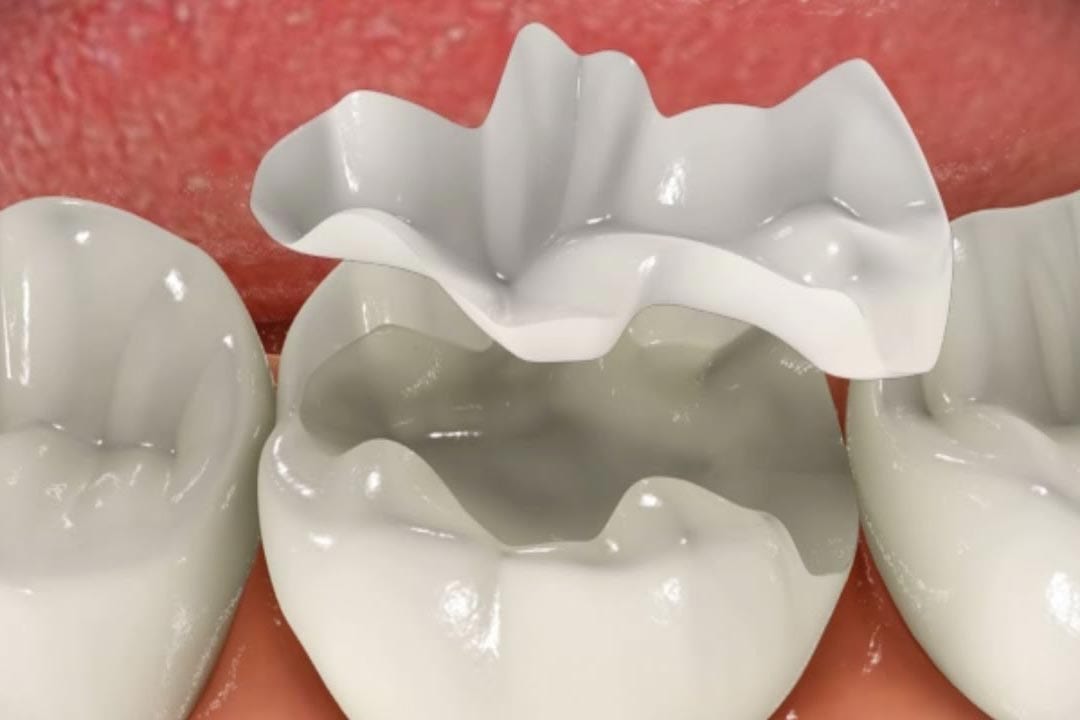
When too much of the tooth is missing for a direct filling to hold, but not so much that the tooth needs a full crown, the answer is an indirect restoration. An inlay sits within the cusps of the tooth. An onlay extends over one or more cusps. Both are made in a laboratory from ceramic or gold and bonded in at a second visit.
They cost more than a direct filling and take an extra appointment, and in return they restore the shape of a badly broken tooth far more precisely, and last longer. Where even an onlay will not do, the tooth usually needs a crown, and a tooth that is lost entirely can be replaced with a bridge, a dental implant or a denture.
After your filling
- If you were numbed, avoid chewing on that side until sensation returns, so you do not bite your cheek or tongue.
- Composite is fully set before you leave, so you can eat normally once the numbness wears off.
- Mild sensitivity to cold for a few days is normal, particularly after a deep filling.
- Call us if your bite feels high, if the tooth aches spontaneously, or if sensitivity is getting worse rather than better after two weeks.
- Fillings do not make a tooth decay proof. Keep brushing twice daily, clean between the teeth, and keep up with scaling and polishing.
Decay that keeps recurring is usually a sign of something upstream: diet, dry mouth, gum recession exposing root surfaces, or gum disease needing periodontal treatment. We would rather fix the cause than keep refilling the same teeth. Our oral health section covers the habits that make the difference.
Same week slots are usually available across our clinics.
Treated at any NoFrills Dental clinic
Fillings are done at all our clinics, including our denture and implant centre at Marina Square, Tanjong Katong and Sri Hartamas in Kuala Lumpur. You can read about the clinicians who will see you, including Dr Li Kexin and Dr Joshua Chong, and our standards are overseen by our clinical advisory board.
If your front teeth are chipped or discoloured rather than decayed, composite bonding, veneers or teeth whitening may suit you better than a filling. And if crowding is trapping food and causing repeated decay between the same teeth, braces or Invisalign may be worth discussing.
Frequently asked questions
What is a dental filling?
A dental filling repairs a tooth damaged by decay. The dentist removes the decayed tissue, shapes the cavity and rebuilds the missing structure with a material such as composite resin, amalgam, gold or ceramic. It restores the tooth's function and stops the decay spreading further.
Are amalgam fillings safe?
Major health authorities including the World Health Organization and the US Food and Drug Administration consider existing amalgam fillings safe for the general population and do not recommend removing sound ones. Removing an intact amalgam takes away healthy tooth and releases more mercury vapour than leaving it. New amalgam placement is being phased down worldwide, and most new fillings placed today are tooth coloured composite.
Is a composite white filling better than an amalgam?
Better for appearance, and it bonds to the tooth so less healthy structure needs removing. Amalgam is generally more hard wearing under heavy chewing load in large back-tooth cavities. For most patients and most cavities, composite is the appropriate modern choice.
Do fillings hurt?
The procedure should not hurt. Deeper cavities are numbed with local anaesthetic, and shallow ones often need nothing at all. Mild sensitivity to cold for a few days afterwards is normal, especially after a deep filling, and it settles.
How long do fillings last?
No filling lasts forever. Gold and amalgam generally last longest, ceramic and composite somewhat less. Your bite, whether you grind your teeth and how well you clean matter more than the material. We check existing fillings at every routine visit and replace them when there is a reason to.
Does CHAS cover dental fillings?
Yes. Fillings are one of the treatments covered under CHAS, and the subsidy is applied at the clinic so you pay the reduced amount directly. Merdeka Generation and Pioneer Generation cardholders receive higher subsidies. MediSave does not cover fillings, as it applies only to surgical procedures.
I have pain after my filling. Is that normal?
Short lived sensitivity to cold or pressure is common for a few days. Contact us if your bite feels high, if the tooth throbs on its own, or if the discomfort is worsening rather than settling after about two weeks. Occasionally a deep cavity irritates the nerve and the tooth needs root canal treatment.
What happens if I leave a cavity untreated?
Decay does not reverse once a cavity has formed. It spreads towards the nerve, and what would have been a routine filling becomes root canal treatment, a crown, or extraction. Early decay is usually painless, which is why it is picked up at check-ups rather than by symptoms.
How much does a dental filling cost in Singapore?
At NoFrills Dental a composite filling starts from $100 and a temporary filling from $60, before GST. A typical first visit for a single small cavity, including consultation at $50 and a periapical X-ray at $80, comes to around $230. Larger or deeper cavities cost more. CHAS cardholders receive a subsidy deducted at the clinic.
Is it cheaper to fill a cavity early?
Considerably. A composite filling starts from $100. Once decay reaches the nerve, the same tooth needs root canal treatment from $500, usually with a crown from $950 on top. If the tooth is lost, an implant starts from $1,950. Treating early costs roughly a fifth of treating late, which is the practical case for six monthly check-ups.
Sources: World Health Organization, oral health and the US Food and Drug Administration on dental amalgam.
Related reading
Commonly asked questions about dental fillings
The questions our dentists field most often, answered in full.
Root canal treatment
What happens when decay reaches the nerve.
CHAS dental subsidies in 2026
What your card covers and what you will actually pay.
Think you have a cavity?
Book a check-up at any NoFrills Dental clinic in Singapore or Kuala Lumpur. We will examine, X-ray if needed, and quote before anything begins.
Schedule an appointment
Leave your details and we will get back to you within one working day. If it is urgent, please call the clinic directly.