
Flossing: How to Clean Between Your Teeth Properly

Written by NoFrills Dental clinical team
Updated 03/08/2026
Clean between your teeth once a day, using floss where the teeth are tight and an interdental brush wherever one fits. A toothbrush physically cannot reach the two surfaces where teeth touch, and those surfaces are where a large share of cavities and gum disease begin.
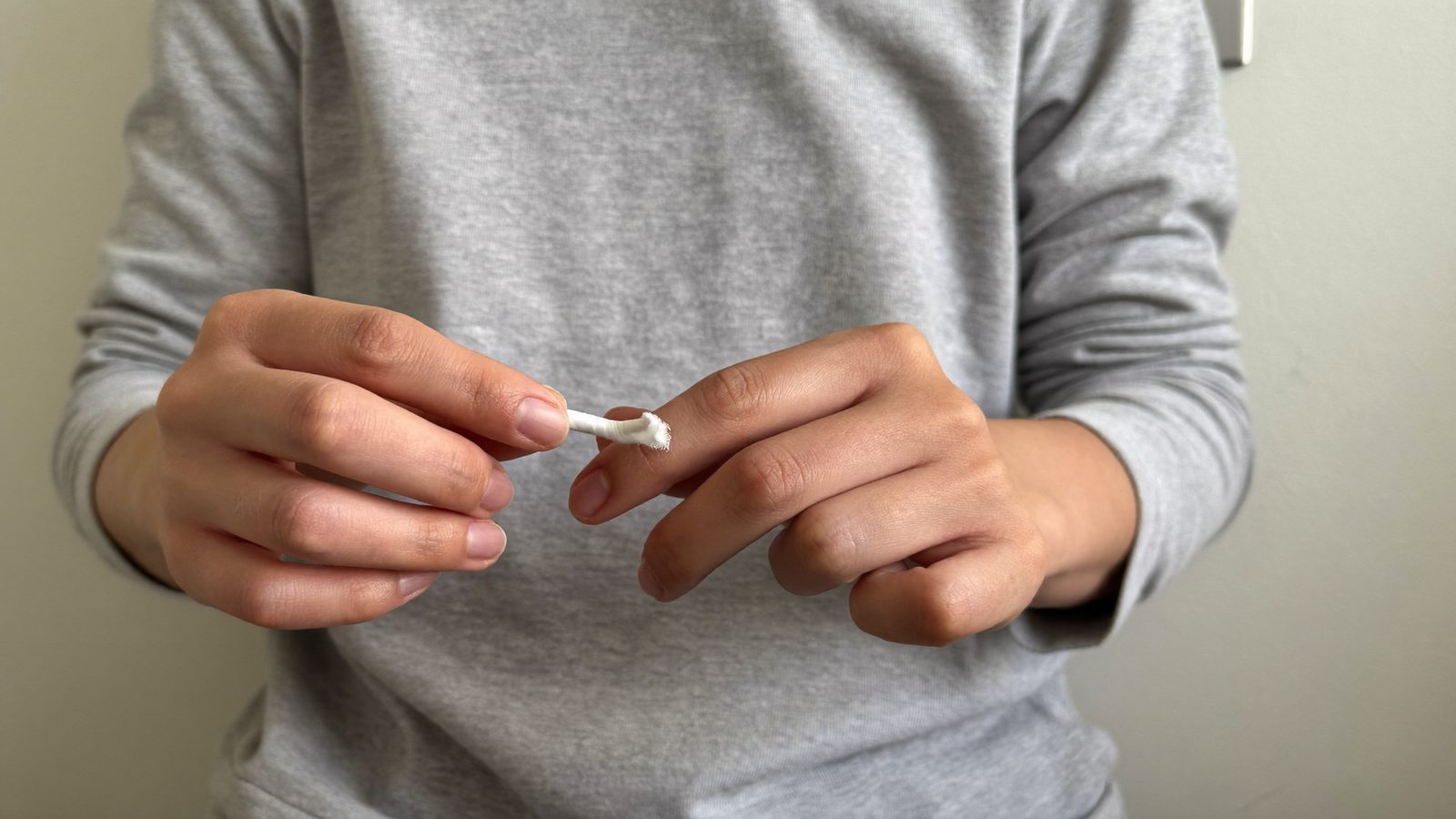
- Once a day is enough. Timing matters less than actually doing it.
- Interdental brushes may work better than floss where the gap is big enough for one.
- Bleeding when you start is common and usually settles within one to two weeks.
Why brushing alone is not enough
Each tooth has five surfaces. A brush cleans the outer, inner and biting surfaces well. It cannot get into the two surfaces that face the neighbouring teeth, and it cannot reach just under the gum edge in those spaces. Plaque left in that gap hardens into tartar within days, and tartar can only be removed with professional scaling.
Left alone, that plaque does two things. It produces acid that dissolves enamel where the teeth touch, causing cavities that are invisible from the outside and are usually found on x-rays. And it inflames the gum in the space between the teeth, which is where gum disease almost always starts.
What the evidence says
Flossing has had a rough press, and the honest summary is more nuanced than either side of that argument suggests. A 2019 Cochrane review found that using floss or an interdental brush in addition to brushing probably reduces gum inflammation more than brushing alone, and that interdental brushes may be more effective than floss for gum inflammation at one and three months. The certainty of the evidence was low, mostly because these trials are short and people behave differently when they know they are being watched.
What that means in practice: cleaning between your teeth is worth doing, the tool matters less than doing it consistently, and if an interdental brush fits your gaps it is probably the better choice. Our page on daily oral hygiene puts this in the context of the full routine.
Source: Cochrane review on home use of interdental cleaning devices (2019).
How to floss, step by step
- Take about 45cm of floss. Wind most of it around one middle finger and a little around the other, so you can move to a clean section as you go.
- Hold a short 2cm length taut between your thumbs and index fingers.
- Guide it between two teeth with a gentle sawing motion. Do not snap it down onto the gum.
- Curve it into a C shape against one tooth and slide it gently under the gum edge until you feel light resistance.
- Move it up and down against that tooth surface a few times, then repeat against the neighbouring tooth in the same gap.
- Move to a clean section of floss and repeat for every gap, including behind the very last molars, which almost everyone forgets.
The whole thing takes under two minutes once it is a habit. If your hands or your reach make this awkward, floss holders, floss picks and interdental brushes are all legitimate alternatives, and the one you will actually use every day is the right one.
Ask us to size interdental brushes for your gaps. It takes two minutes and makes the habit easier to keep.
Floss, interdental brushes or a water flosser
| Tool | Best for |
|---|---|
| Dental floss or tape | Tight contacts where nothing else fits. Tape is gentler for wider gaps. |
| Interdental brushes | Any space wide enough to take one. Easier to use well, and generally more effective where they fit. |
| Floss picks and holders | Limited dexterity, back teeth, and anyone who otherwise would not bother. |
| Water flossers | Braces, bridges, implants and crowded teeth. A useful addition rather than a full replacement. |
| Superfloss or floss threaders | Cleaning under bridges and around implants. |
If you wear braces, cleaning between the teeth is harder and matters more, since plaque trapped around brackets causes permanent white marks on the enamel. Threaders and water flossers earn their place there.
If your gums bleed when you floss
Bleeding is not a reason to stop, and it is not a sign that you are damaging the gum. In almost every case it means the gum in that space is already inflamed by plaque, and the floss has simply found it. Keep going gently and consistently: the bleeding usually stops within one to two weeks as the inflammation settles.
See a dentist if the bleeding continues beyond that, if a gap has suddenly become larger, if food packs into the same spot every day, or if the gums are receding or the teeth have started to feel loose. Those are signs of established gum disease rather than a technique problem. Smokers should note that nicotine reduces gum bleeding, so the absence of bleeding is less reassuring for them.
Mistakes that make flossing useless
- Snapping the floss straight down. It cuts the gum and skips the surfaces you are trying to clean.
- Going straight down and straight out. Without the C curve against each tooth, you clean almost nothing.
- Using the same section for every gap. You are moving plaque from one space to the next.
- Skipping the back of the last molars. That surface has no neighbour and is very easy to forget.
- Flossing once, seeing blood, and never trying again. The most common reason people quit, and the least good one.
Want someone to check your technique?
Bring your floss or interdental brushes to your next visit at Suntec City, Marina Square, Marine Parade and Tanjong Katong and we will run through it with you.
Frequently asked questions
What does flossing actually do?
Flossing removes plaque and trapped food from the two surfaces of each tooth that a brush cannot reach, and from just under the gum edge between the teeth. That is where a large share of cavities start and where gum disease usually begins, so cleaning there prevents problems that brushing alone will not.
Should I floss before or after brushing?
Either is fine, though cleaning between the teeth first has a small advantage: it opens up those surfaces so the fluoride in your toothpaste can reach them. What matters far more is that it happens once a day, every day.
Are interdental brushes better than floss?
Where a brush fits the space, the evidence mildly favours interdental brushes for reducing gum inflammation, and most people find them easier to use well. Floss is still the right tool for tight contacts where a brush cannot pass without forcing. Many people use both in different parts of the mouth.
Can flossing create gaps between my teeth?
No. Correct flossing does not move teeth or widen the spaces between them. If a space is genuinely getting bigger, that is usually gum recession or bone loss from gum disease, which is a reason to be examined rather than a reason to floss less.
How often should I floss?
Once a day is the standard recommendation and is enough for most people. Plaque takes about 24 hours to re-form to a level that matters, so a daily clean keeps ahead of it. More than once a day adds little and increases the chance of irritating the gums.
Is a water flosser as good as string floss?
A water flosser is very good at flushing out debris and is genuinely useful with braces, bridges and implants, but it does not scrape the tooth surface the way floss or an interdental brush does. Treat it as a strong addition to your routine rather than a full replacement, unless your dentist has advised otherwise for your situation.
Related reading
More in this series: bad breath, daily oral hygiene, cavities and tooth decay, mouth spots and sores and TMJ and jaw pain.
Sources: Cochrane review of interdental cleaning devices (2019), American Dental Association on floss and interdental cleaners.